Develop private-label wallets down to the details customers notice
Start with a sketch, reference, or physical sample for a wallet, card holder, travel wallet, ID case, or phone wallet. We help define the leather article, real-use capacity, loaded profile, edge finish, branding, and packaging before you commit to bulk production.
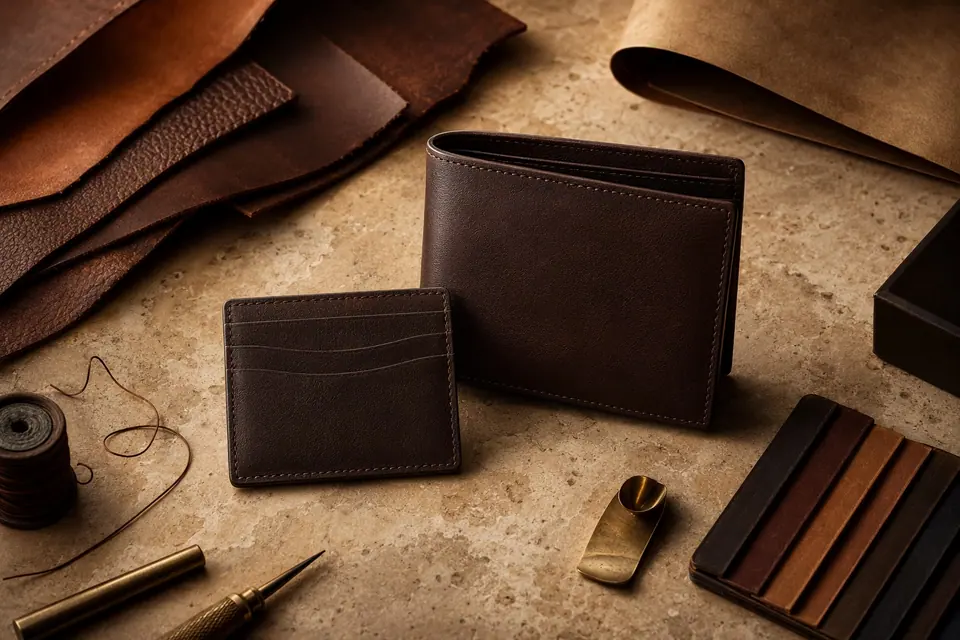
Plan the Product Range
Choose a wallet format around what the customer actually carries
Compare capacity, access, closure, loaded thickness, leather behavior, and retail position before spending time on surface details.
 9 styles
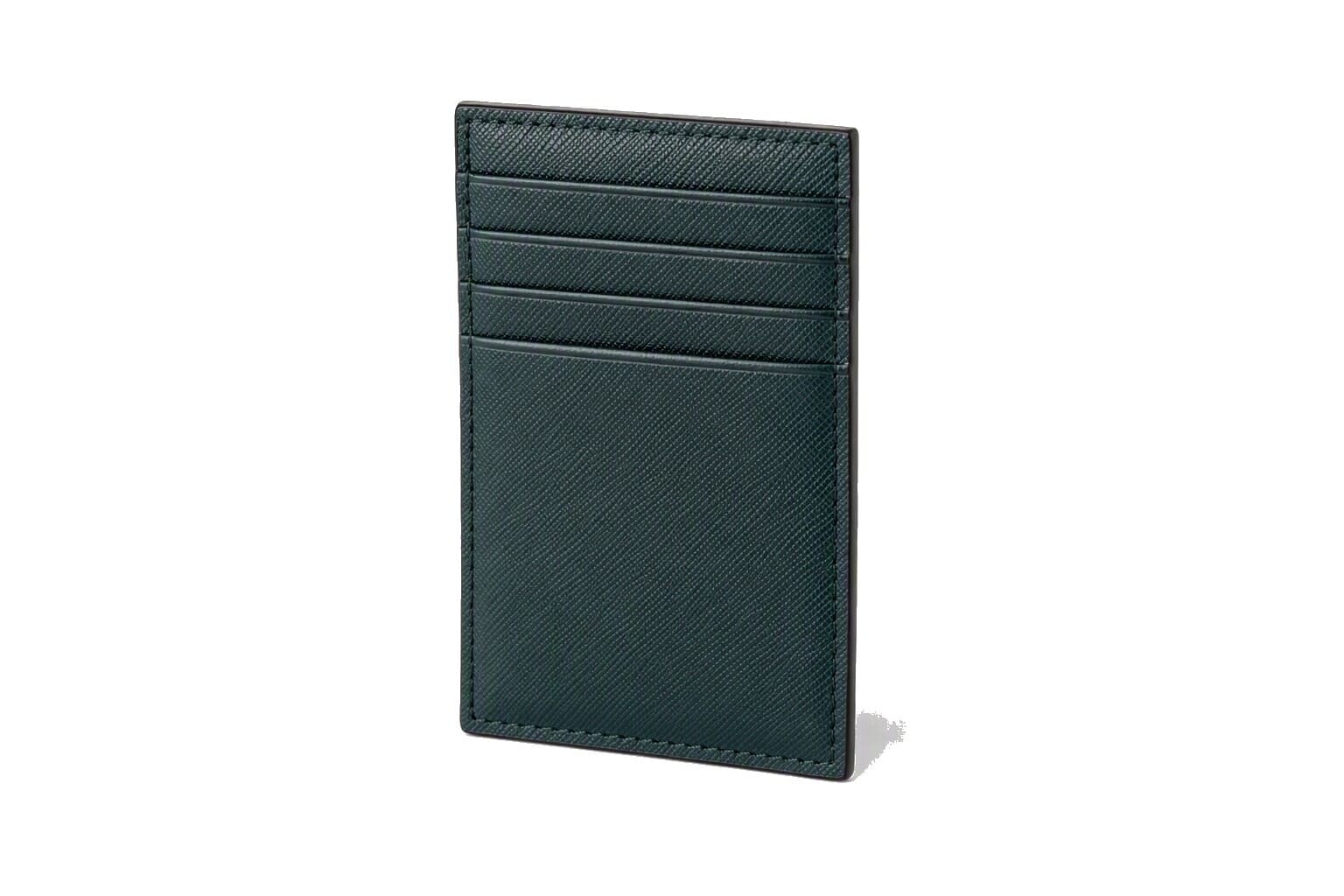
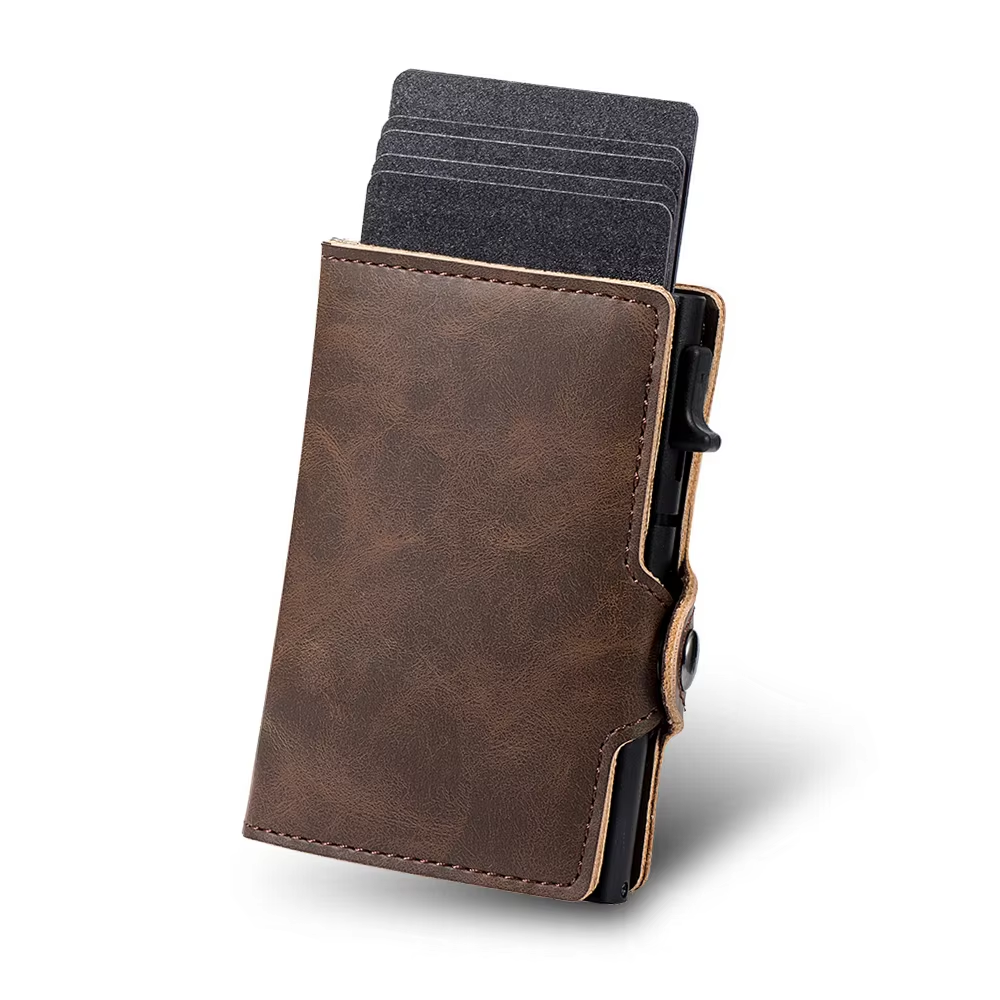
 Define Card Holders by Access, Retention, and Carry Method
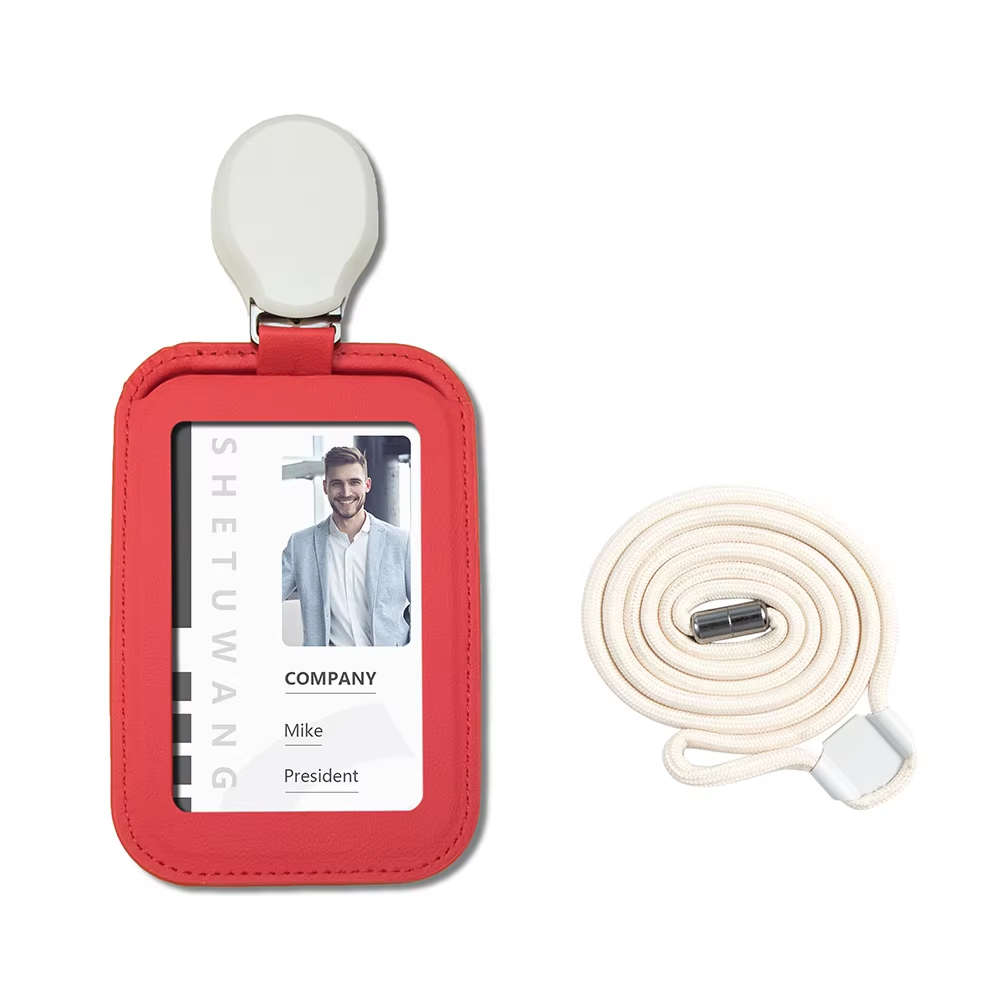
Develop slim card holders, ID cases, money clips, and lanyard formats around the intended cards, access pattern, retention, branding, and daily carry.
Learn more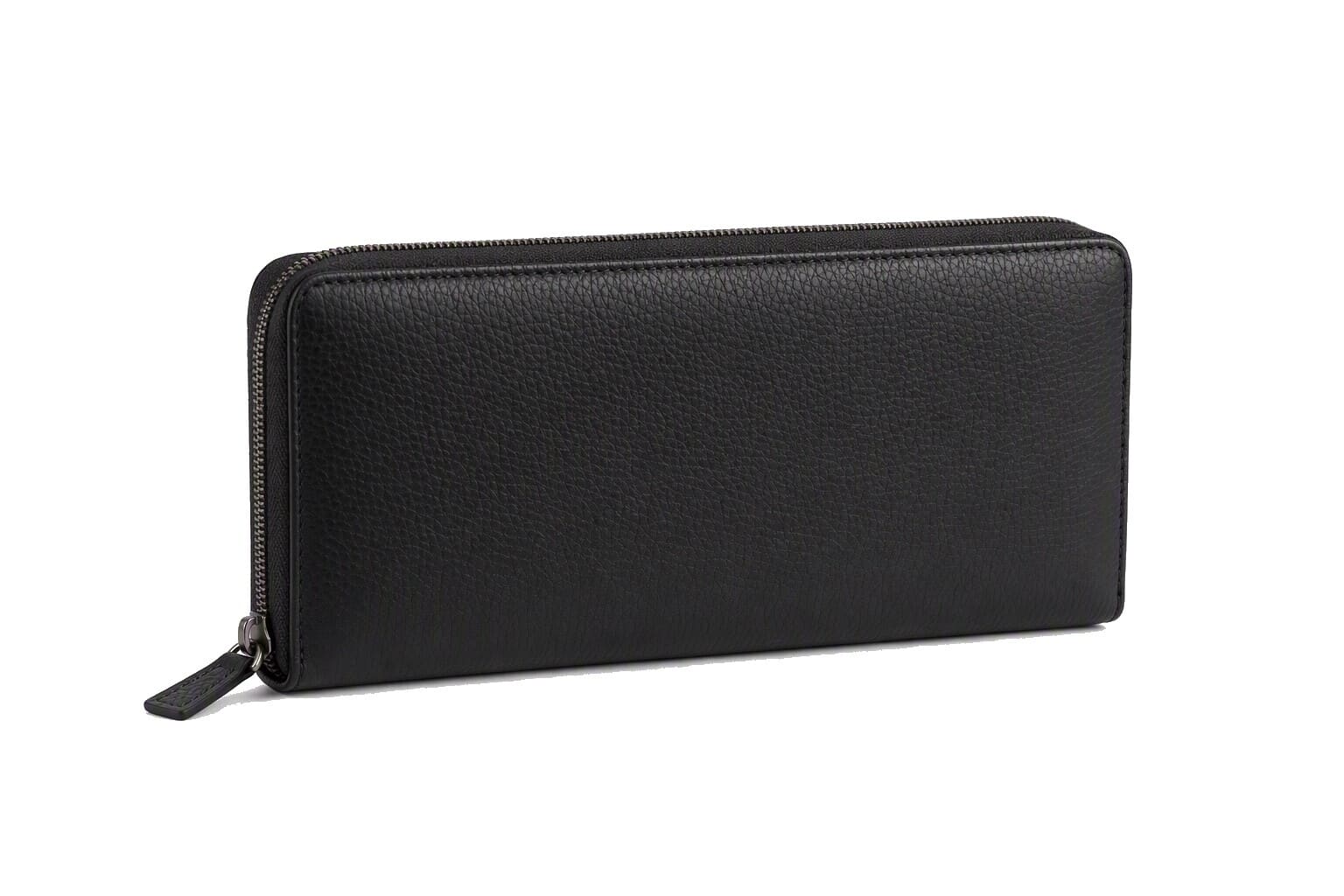 3 styles
 Plan Long Wallets Around Capacity, Closure, and Loaded Profile
Develop long, travel, clutch, and zip-around wallets by defining document size, card capacity, cash and coin storage, closure, leather, and finished thickness.
Learn more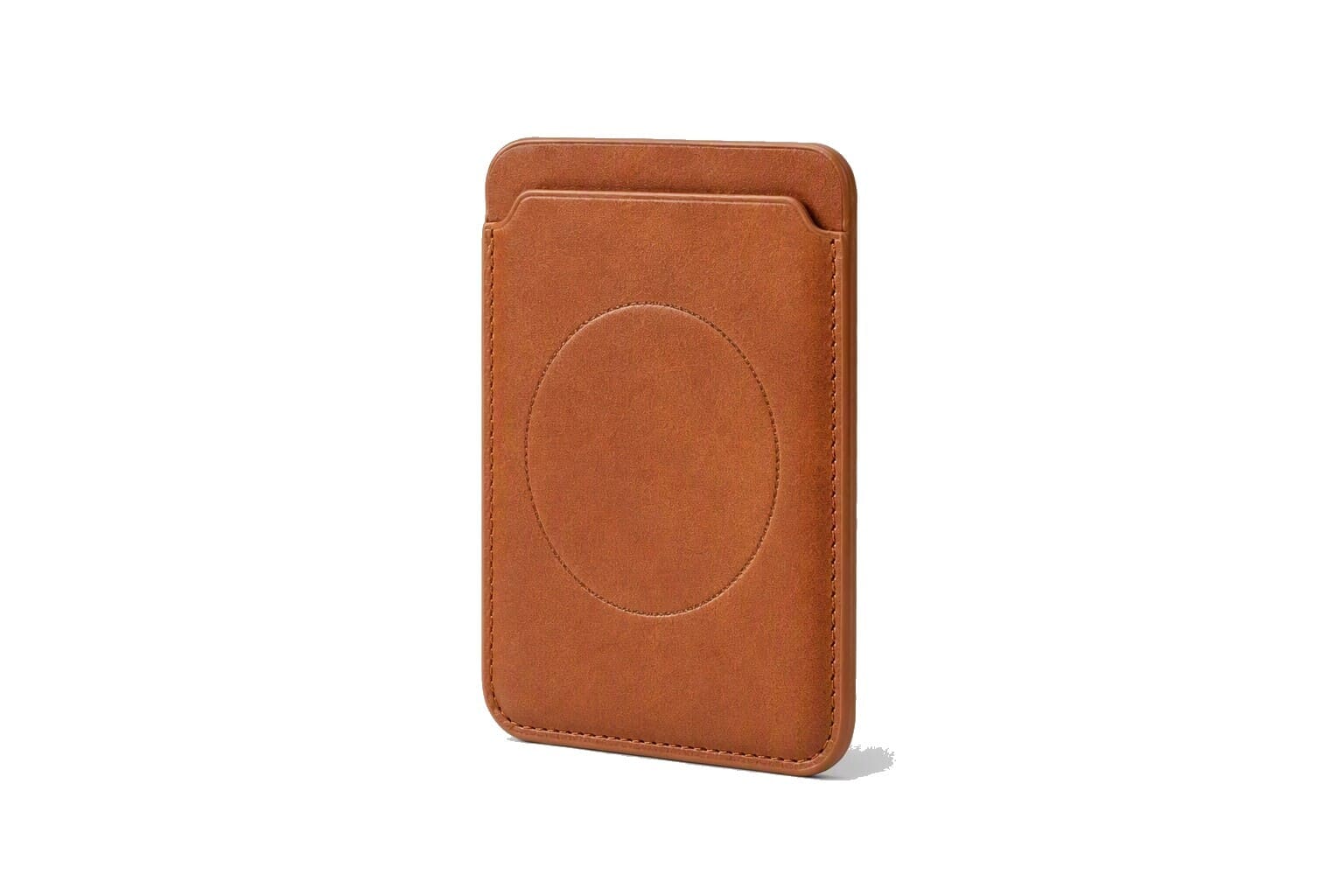 2 styles
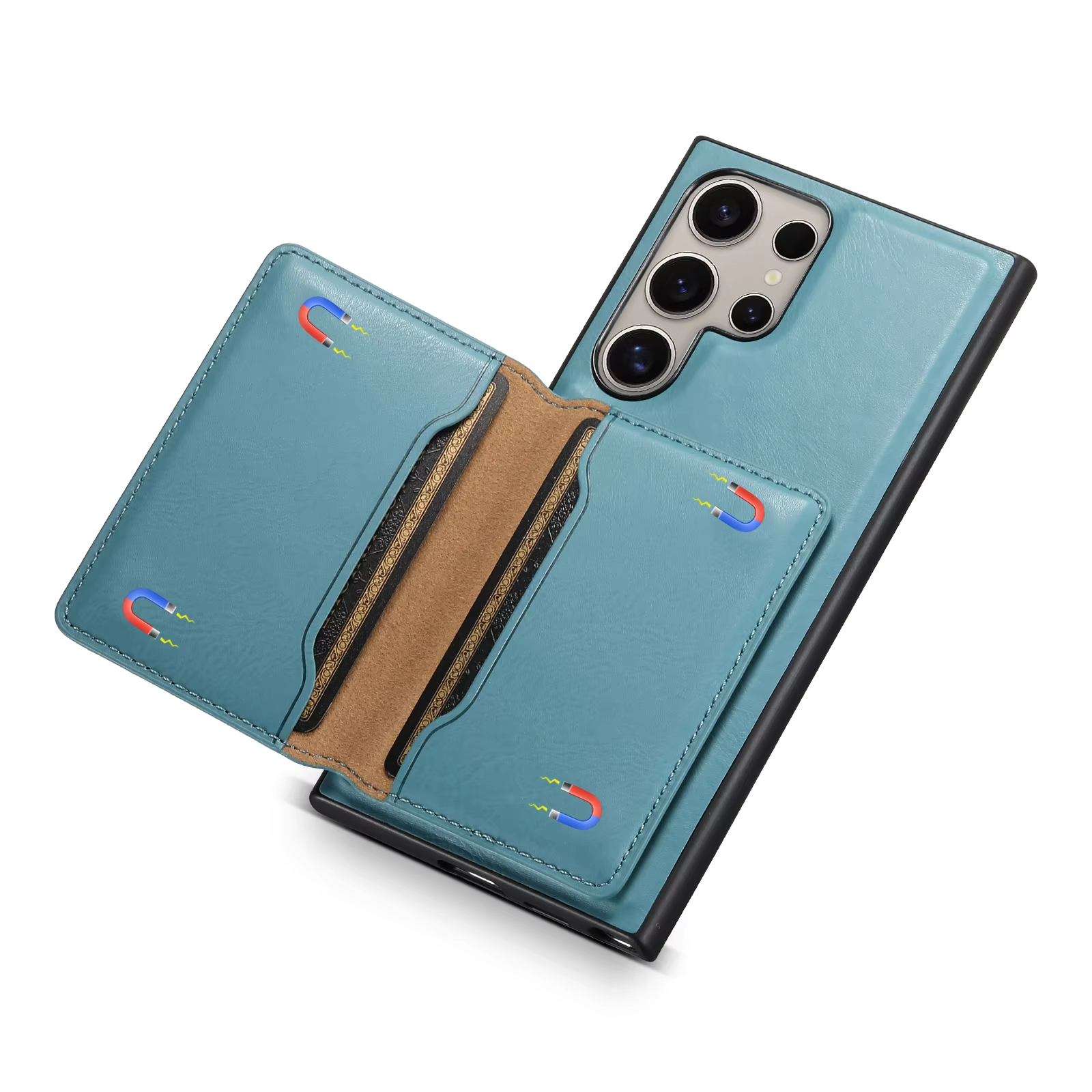
 Develop Phone Wallets Around Fit, Alignment, and Daily Access
Define device compatibility, magnetic alignment, card capacity, charging clearance, leather finish, and branding before approving a phone-wallet sample.
Learn more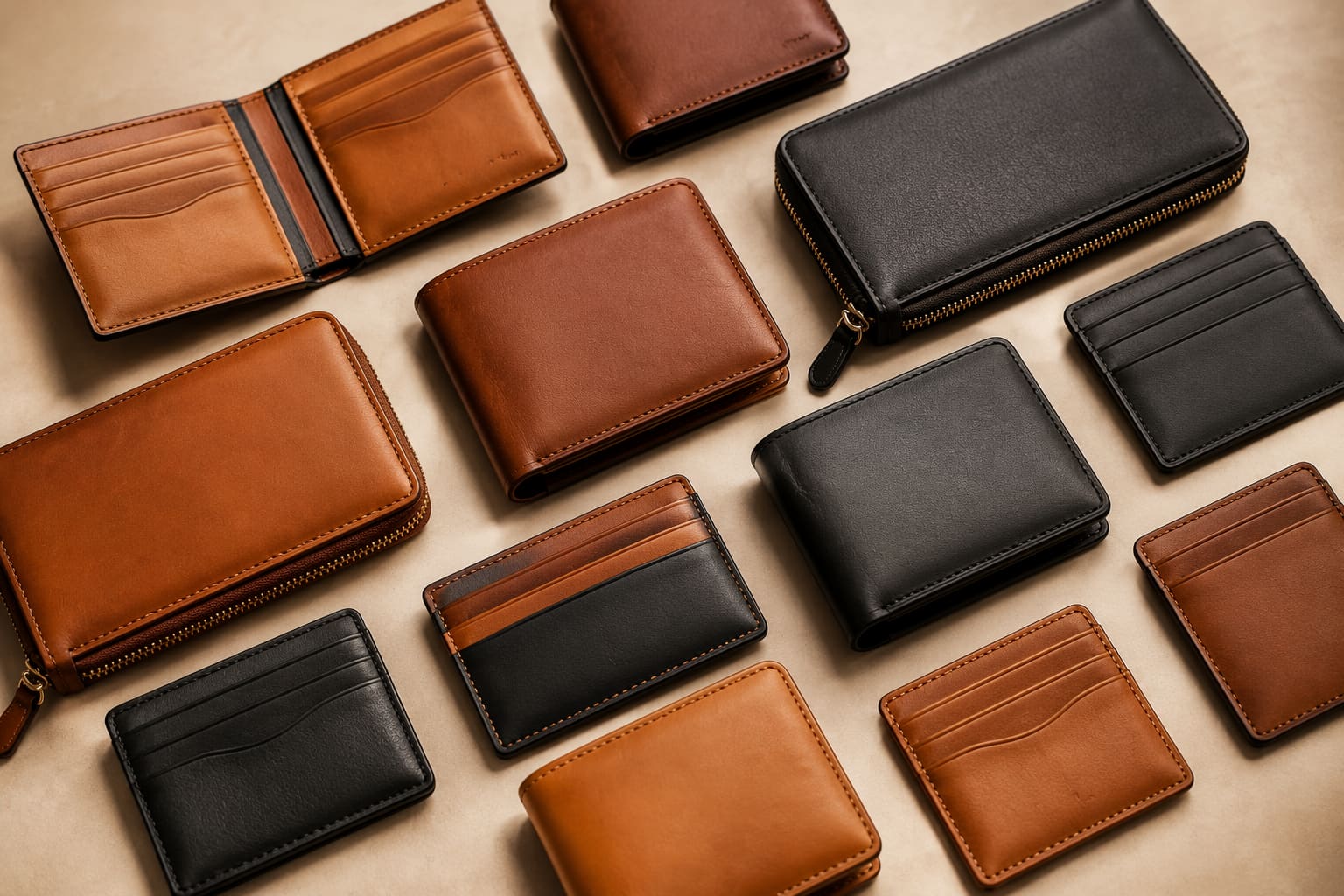 8 styles
 Engineer Compact Wallets Around Fold, Capacity, and Finish
Develop bifold, short, trifold, and coin-pocket wallets with the card layout, cash space, fold profile, leather, edge finish, branding, and packaging specified.
Learn moreUse a reference format to make the first decisions tangible
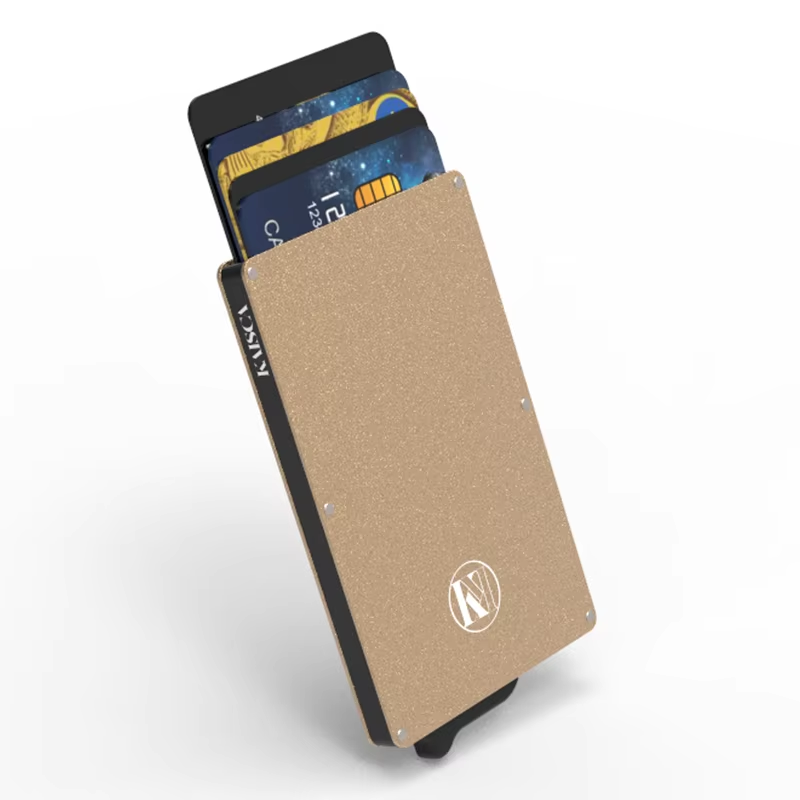
These products are visual references, not fixed specifications. Use them to discuss capacity, access, leather direction, edge treatment, branding, and presentation.
Turn a wallet concept into an approved product standard
Each stage answers a specific set of material, function, finishing, and release questions before the next commitment.
Review the brief and the product position
Share the target customer, format, quantity, price position, market, and required date. We will identify the leather, structure, and sampling decisions needed for useful costing.
Test function before committing
Prototype the fold, pocket layout, reinforcement, zipper or closure, edge construction, and branding placement with the intended contents.
Lock the visible product standard
Approve leather character, edge paint, stitching, hardware, lining, logo execution, and packaging on the physical sample.
Control variation in bulk
Monitor cutting, assembly, stitching, and finishing, then inspect leather character, dimensions, function, and workmanship against agreed limits.
Release a retail-ready order
Confirm the approved presentation, protect finished surfaces, review inspection evidence, and coordinate shipment.
Leather Specification
Choose leather by behavior, not by a familiar label
Compare grain layer, tanning method, temper, thickness, surface finish, aging, and price. Saffiano describes a cross-hatched finish, not a leather grade.
Full-Grain Leather
Leather retaining the natural grain surface, with visible variation, cutting yield, temper, finish, and aging behavior confirmed for the selected article.
Learn moreSaffiano-Style Cross-Hatched Leather
A structured cross-hatched finish whose base leather, coating, emboss depth, temper, and flex behavior must be confirmed for the product.
Learn moreVegetable-Tanned Leather
Leather made primarily with vegetable tanning agents, with temper, color change, edge behavior, finish, and acceptable variation defined by the selected article.
Learn morePrepare a Better Wallet Brief
Know what to specify before requesting a price
Use the guides to define leather, pocket layout, loaded thickness, edge finish, sample checks, quality criteria, and order timing.
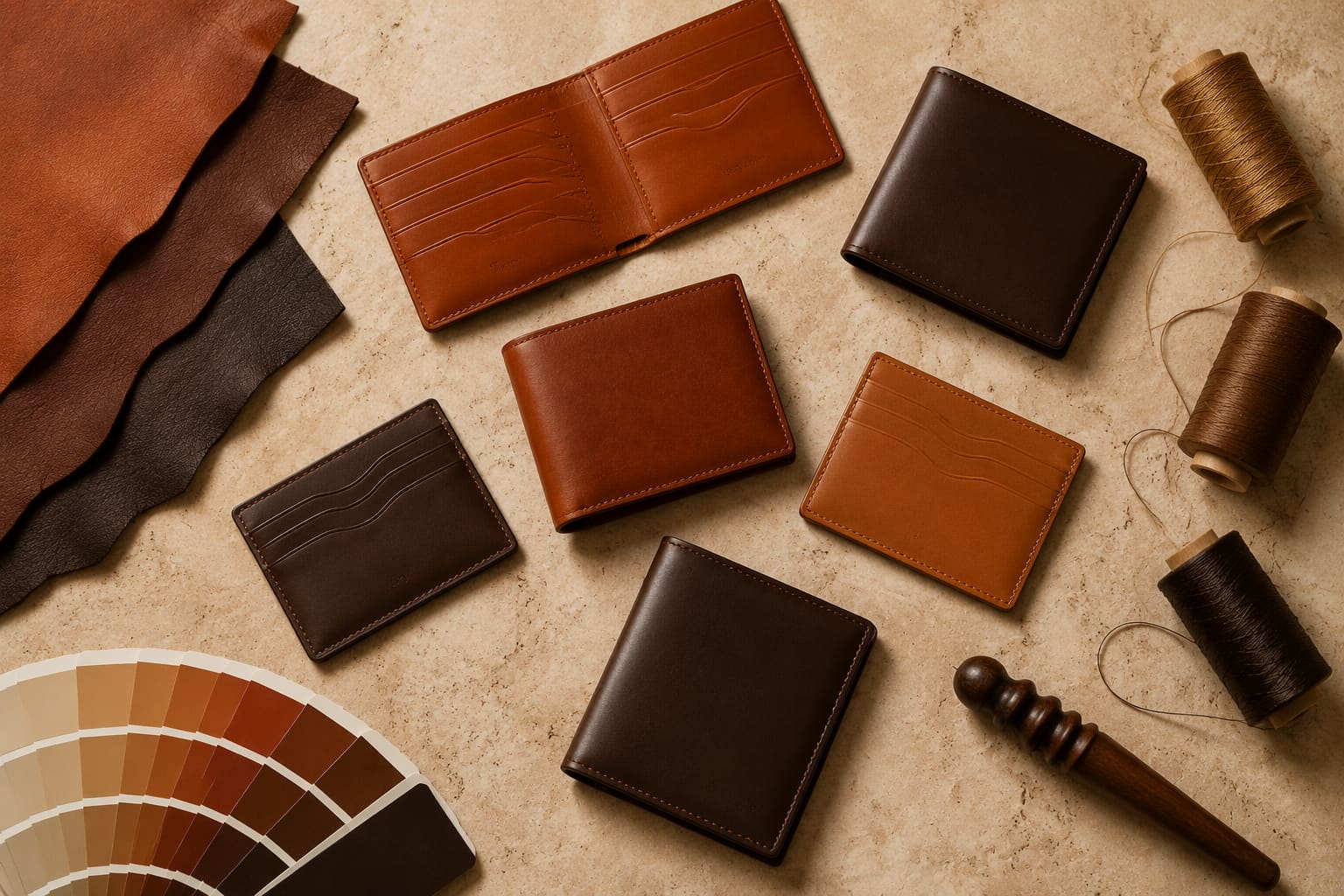
How to Source Custom Leather Wallets: A Buyer's Guide for Brands
A practical, step-by-step guide to sourcing custom leather wallets from a manufacturer — covering leather selection, MOQ, edge finishing, sampling, quality control, and realistic lead times.
Read guide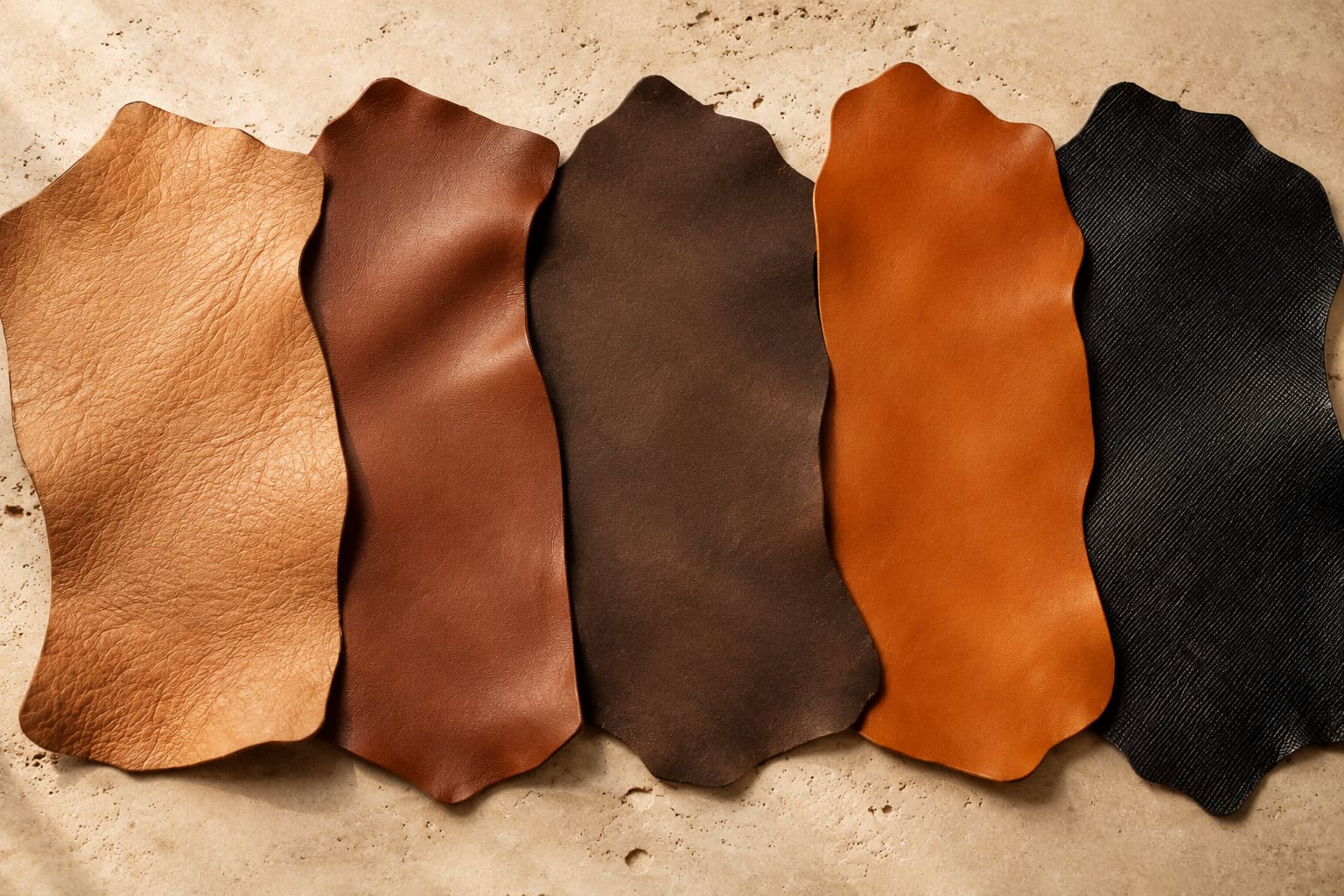
Leather Types Explained: Full-Grain, Top-Grain, Genuine, and More
A clear guide to the leather grades and finishes used in wallets and accessories — how each looks, how it wears, what it costs, and which products it suits best.
Read guideDocument Review
Leather compliance checks before bulk production
Leather documentation applies to a specific tannery, article, color, and order. Confirm the issuer, scope, test sample, and validity before making a product claim.
Leather identity and traceability
Tannery, leather article, grade, origin, thickness, and lot reference
Responsible sourcing evidence
Current LWG rating or equivalent checked against the selected tannery
Restricted-substance testing
REACH, Chromium VI, azo dyes, and destination-specific limits scoped per order
Color and finish approval
Approved swatch records grain, shade, temper, edge paint, and surface finish
Workmanship inspection plan
Pocket layout, dimensions, stitch quality, edge finish, hardware, and logo limits
Retail presentation records
Packaging materials, labeling, barcode, protection, and packing method approved per SKU
Questions to resolve before investing in samples
Straight answers on leather, minimums, sample stages, timing, customization, and documentation.
What is your minimum order quantity (MOQ)?
MOQ depends on the leather article, color, construction, branding, packaging, and quantity per SKU. Share the proposed range and target quantity for a project-specific review.
What leathers do you work with?
We can source leather by grain layer, tanning method, animal species, temper, thickness, and surface finish. Cross-hatched and pebble-grain finishes are specified separately from leather grade. Current origin and traceability records must match the selected leather article.
Can I request samples before placing a bulk order?
Yes. The appropriate sample stage depends on how complete the specification is. Sample charges, revision rounds, lead time, and any order credit are agreed in writing before work begins.
What is your production lead time?
Timing depends on leather availability, sample revisions, construction, finishing, quantity, packaging, and the required delivery date. We provide a written schedule after the specification is reviewed.
Do you offer OEM and ODM?
Both. We manufacture your finished designs (OEM) and co-develop new styles from a concept or reference (ODM), including leather selection, edge painting, hardware, custom lining, debossing, and gift packaging.
What compliance documents can you provide?
We can coordinate market-specific testing and provide the current material or order documentation available for the selected specification. Confirm the required documents before production.
Have a wallet reference but not a complete specification?
Send the reference with your target customer, price position, quantity, market, and required date. We will review project fit and identify the material, construction, and sample decisions needed next.
Get a Custom Quote